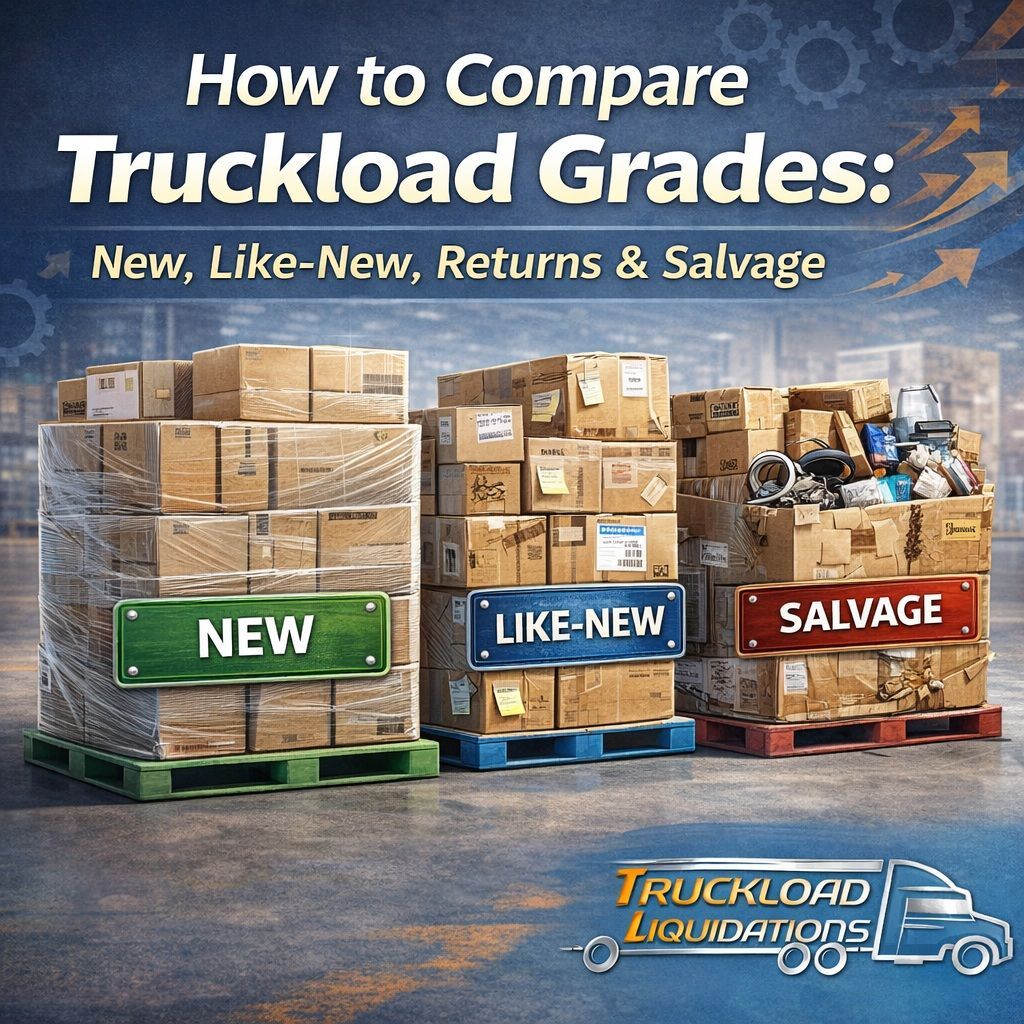
Brand New & Overstock: The Gold Standard
Brand new inventory, often referred to as overstock or shelf pulls, is exactly what it sounds like: product that has never been purchased by a customer. These items are typically removed from store shelves to make room for new seasonal arrivals.
While these loads command a higher percentage of retail cost, they are the easiest to process. If you specialize in clothing truckloads, sourcing overstock ensures you aren't dealing with missing buttons or deodorant stains. You get clean, retail-ready merchandise that can go straight to your sales floor.
"Like-New" and Customer Returns
This is the most common grade in the liquidation world. Customer returns are a mixed bag. Many items are "Like-New", customers often return products simply because they changed their mind or the box was slightly dented during shipping.
- Grade A/B Returns: High functionality rate, minimal cosmetic wear, and often includes original packaging.
- Unprocessed Returns: Raw loads that haven't been sorted. These offer the highest potential ROI but require more "sweat equity" to test and clean.
Home Improvement and Hard Goods Grades
When dealing with home improvement truckloads, grades become even more critical. A "New" power tool load is a premium asset, whereas a "Salvage" tool load might consist of units used on a job site and returned after they broke.
For hard goods, always look for "Clean Returned Condition" or "Shelf Pull" designations if you do not have a dedicated repair team. However, if you have the skills to refurbish machinery or electronics, Salvage loads can be acquired for pennies on the dollar.
Salvage: The High-Risk, High-Reward Play
Salvage grade inventory is typically sold "as-is" and is known to have a higher percentage of non-working items. This grade isn't for everyone. It is best suited for export buyers, replacement part specialists, or those with low labor costs for refurbishment.
Final Thoughts: Match the Grade to Your Model
Your success depends on your business model. If you run a high-end boutique, stick to Overstock and Shelf Pulls. If you operate a "Treasure Hunt" style bin store, a mix of Customer Returns provides the variety your customers crave.
By mastering these grades, you take the guesswork out of liquidations. Always ask your specialist for as much information where available, and ensure you are buying from a direct source to guarantee the integrity of the grade like TruckloadLiquidations.com.