The Hidden Cost of the Single Pallet
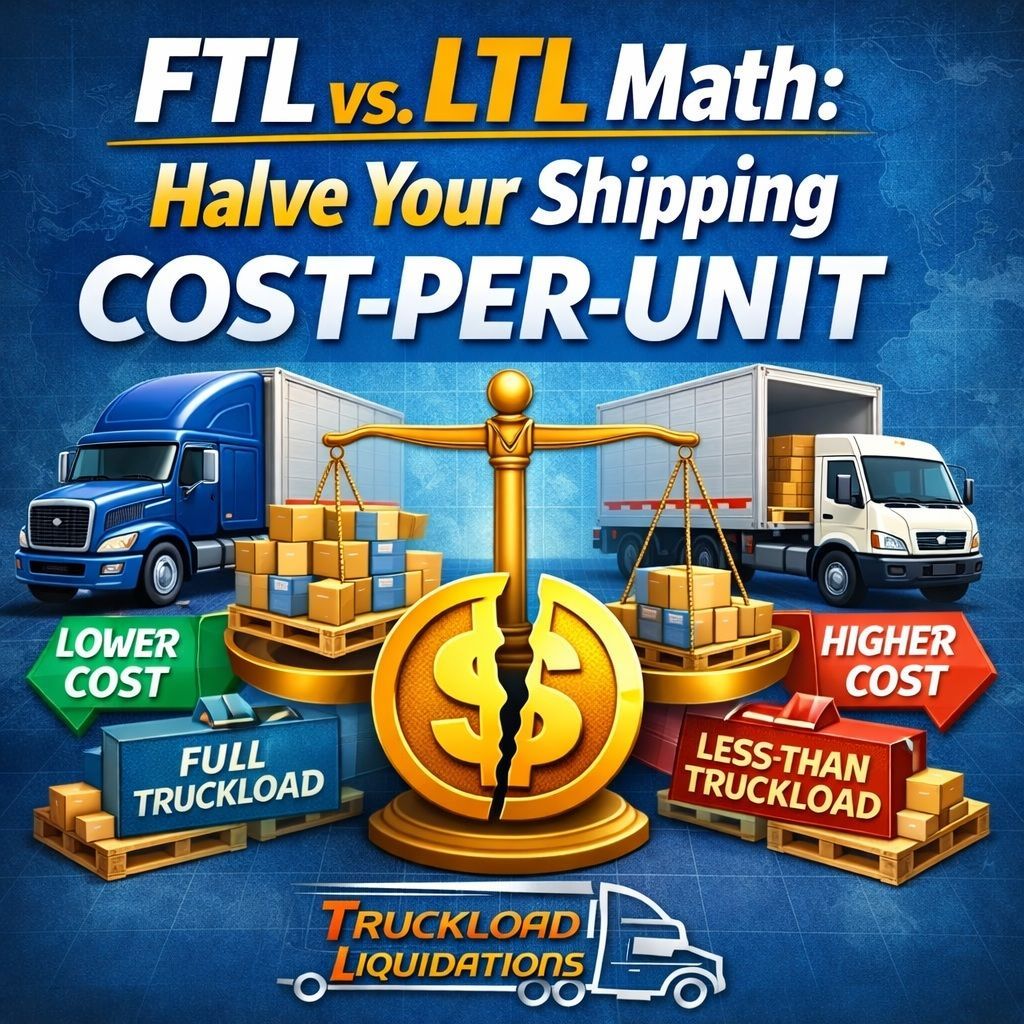
When you order a single pallet via LTL, you aren't just paying for the space it takes up. You are paying for the driver’s time to stop, the fuel for local delivery, and the overhead of multiple "hub-and-spoke" transfers. In contrast, when you secure a truckload shipping quote, you are paying a flat rate for a dedicated haul. This eliminates the middleman handling fees that quietly drain your ROI.
Breaking Down the "Cost-Per-Unit" Formula
Let’s look at the 2026 averages. An LTL shipment for a single pallet of general merchandise truckload stock might cost you $250–$400 depending on the lane. If that pallet has 100 units, your shipping "tax" is $2.50 to $4.00 per item.
Now, compare that to a full 53-foot trailer holding 26 pallets. A dedicated FTL haul on the same lane might cost $2,600. That brings your shipping cost down to roughly $100 per pallet, or just $1.00 per unit. By moving from LTL to FTL, you have effectively tripled your profit potential on every single item.
Efficiency with Home Depot Truckloads
Large-format items found in Home Depot truckloads make this math even more vital. Because vanities, power tools, and patio furniture take up significant cubic volume, LTL carriers often hit you with "oversize" or "density" surcharges. FTL doesn't care about the weight or the dimensions, as long as it fits in the box. You buy the space; you own the savings.
Frequency vs. Friction
Many new buyers fall into the trap of ordering "just in time" pallets to keep cash fluid. However, as we explain in our guide on truckload liquidation pricing, the friction of repeated small shipments adds up to thousands of dollars in wasted capital annually. Consolidating your buying power into one full truck per month, rather than two pallets per week, is the fastest way to scale a retail business.
Final Verdict: Go Big or Pay the Premium
Shipping is a fixed expense that can either work for you or against you. If you are serious about competing in the 2026 resale market, you have to look at the trailer as a whole. Halving your shipping cost isn't about finding a cheaper carrier—it's about maximizing the 53 feet of steel you’ve already paid for.
Ready to see the difference for yourself? Stop paying the "LTL tax" and start looking at the bigger picture. Your bottom line will thank you.